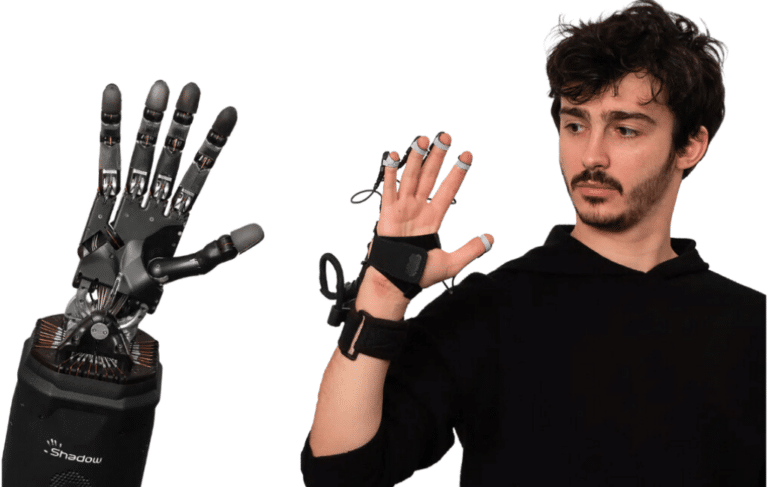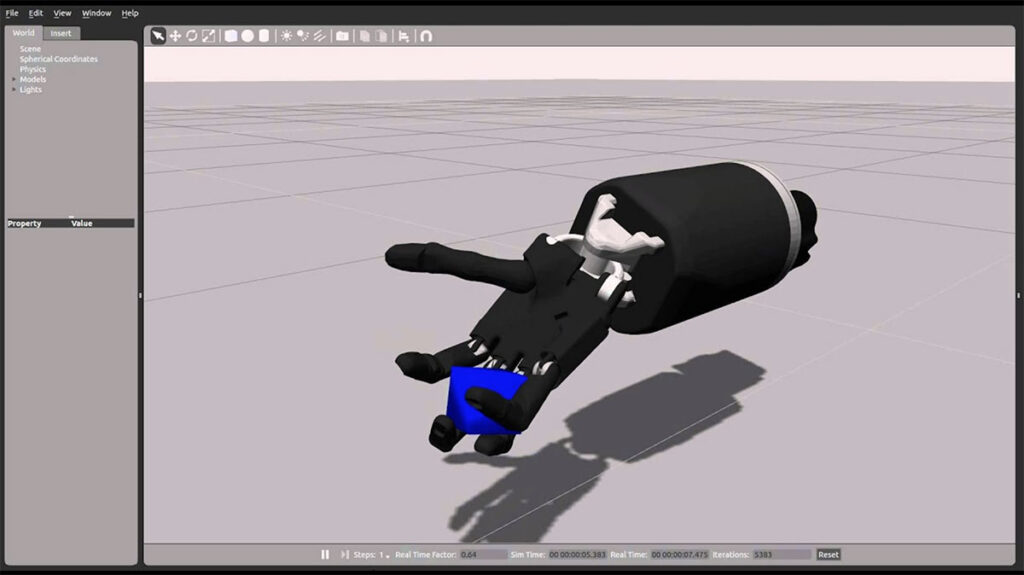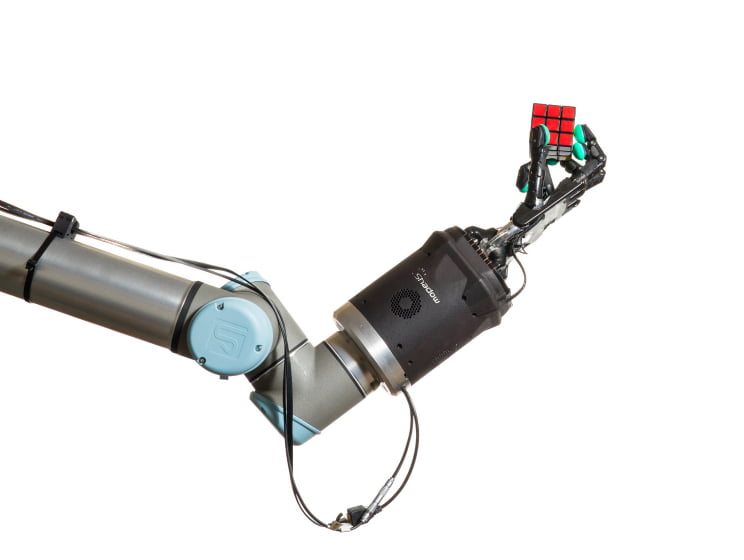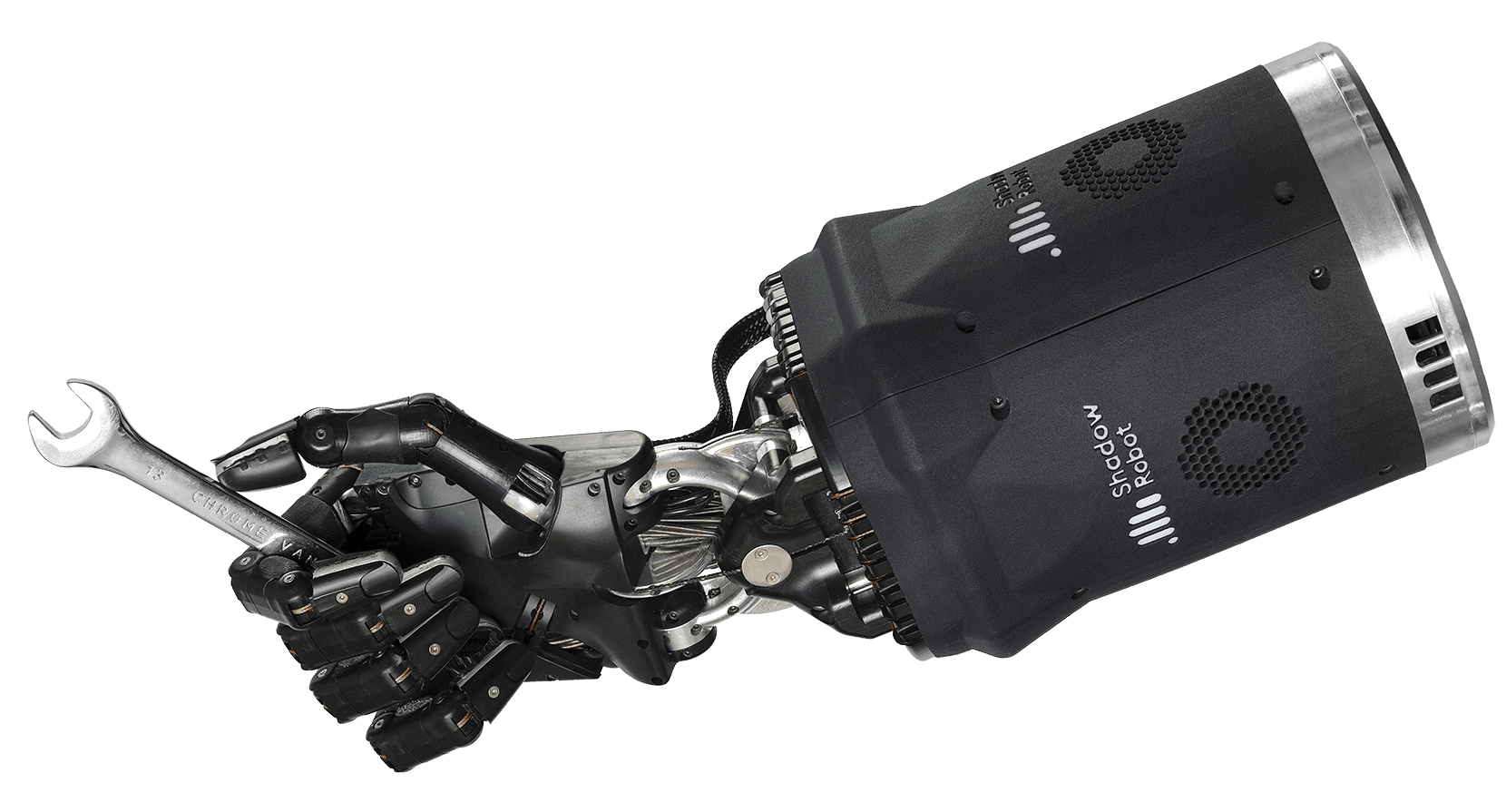
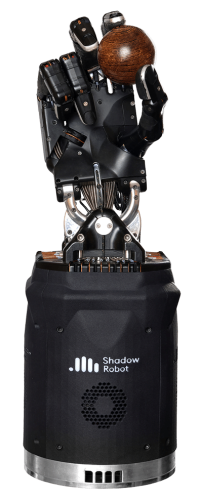
Palm flex
The extra DOF here allows the little finger to oppose the thumb and gives the palm more human-like behaviour.
Wrist
With 2 extra DOF at the wrist, it provides flexibility, optimises accurate positioning of the hand, and helps avoid singularities when mounted on a robot arm.
With 2 extra DOF at the wrist, it provides flexibility, optimises accurate positioning of the hand, and helps avoid singularities when mounted on a robot arm.
Abduct/Adduct
Each finger has an independent side-to-side motion for impressive in-hand manipulation and other movements with advanced dexterity
Tendon Driven
Provides postural stability, shock mitigation, and bending to facilitate dexterous motion.
Provides postural stability, shock mitigation, and bending to facilitate dexterous motion.
Multiple tactile sensing options
A range of different finger tactile tips are available depending on your dexterity needs
A range of different finger tactile tips are available depending on your dexterity needs
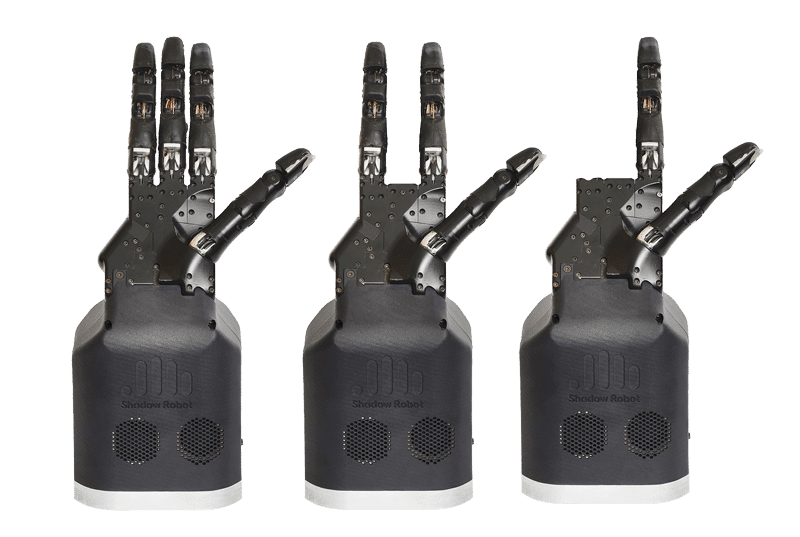
| Overview | Shadow Dexterous Hand | Shadow Dexterous Hand Lite | Shadow Dexterous Hand Extra Lite | Shadow Dexterous Hand Super Lite |
|---|---|---|---|---|
| Degrees of Freedom (DOF) | 20 actuated DOF and a further 4 under-actuated movements for a total of 24 joints | 13 DOF across 16 joints | 10 DOF across 12 joints | 7 DOF across 8 joints |
| Overall Weight | 4.3 Kg | 2.4 Kg | 2.1 Kg | 1.8 Kg |
| No. of Fingers | 4 + 1 (thumb) | 3 + 1 (thumb) | 2 + 1 (thumb) | 1 + 1 (thumb) |
| No. of Actuators | 20 DC motors | 13 DC motors | 10 DC motors | 7 DC motors |
| No. of Finger Joints | 4 | 4 | 4 | 4 |
| No. of Thumb Joints | 5 | 4 | 4 | 4 |
| No. of Wrist Joints | 2 | 0 | 0 | 0 |
| No. of STFs fitted as standard | 2 | 2 | 1 | 1 |
| Max No. of STFs | 5 | 4 | 3 | 2 |
| No. Inertial Measurement Units (IMU) | 1 | 1 | 1 | 1 |
| No. of Tendon Load Sensors | 40 | 26 | 20 | 14 |
| Control loop rate through host | 1kHz (EtherCat protocol) | 1kHz (EtherCat protocol) | 1kHz (EtherCat protocol) | 1kHz (EtherCat protocol) |
| ROS Open Source Platform |  | | | |
| Easily Integrated on Robot Arms | | | | |
| Upgradable With Other Components | | | | |